
Container Radiation Shielding Projects in Ajman
Project-focused technical support for container radiation shielding projects in Ajman. Scope is tailored to equipment, operating workflow, site conditions, shielding design interfaces and applicable safety requirements.
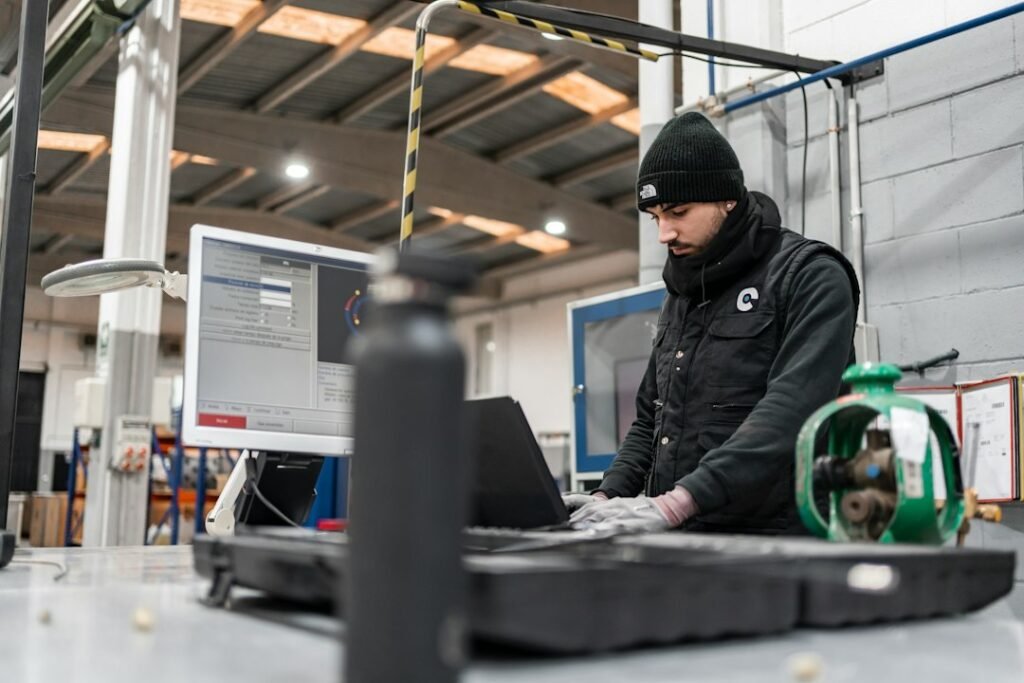
Scope & site review
Define the equipment, workflow, access constraints and operating environment.
Technical planning
Coordinate shielding, documentation, design interfaces and relevant safety controls.
Verification & handover
Agree inspection, quality records and project handover requirements appropriate to scope.
Discuss Your Location-Specific Requirements
Share your location, facility or organization type, relevant equipment or course, and the support you need. The team can then discuss an appropriate scope and next steps.
Container Shielding Projects: What the Solution Is Designed to Achieve
Medcare Hub supports project planning for container-based radiation shielding used in industrial non-destructive testing (NDT), radiography and related inspection operations in Ajman, UAE. A suitable enclosure starts with the actual radiation source or X-ray equipment, operating workload, site geometry and occupancy—not a generic container specification. This page explains the engineering, fabrication, radiation protection, verification and handover considerations for a project in Ajman.
Important: shielding specifications must be based on project-specific calculations and verified under the intended operating conditions. No standard wall thickness or container format is suitable for every source, workload or site.
Planning container shielding in Ajman
Ajman projects may be planned for compact industrial plots, service workshops, fabrication operations, or contractors needing a controlled location for repeated NDT work. A site walk-through should verify real clearances, access for lifting equipment, adjacent occupied spaces, and the ability to control entry during radiography.
Where a yard has limited space, do not assume a small external footprint guarantees safe operation. The radiation assessment must evaluate the source-to-boundary geometry, shielding continuity, beam directions, occupancy beyond each wall, and whether temporary exclusion distances can be maintained.
A practical Ajman project package should also resolve utilities, ventilation, drainage, fire and emergency access, corrosion protection, cleaning access, and future maintenance of doors and seals. These facility issues should be coordinated with the shielding design, not treated as cosmetic finishing items.
Project Discovery and Technical Brief
A container-based radiation shielding project adapts a steel enclosure or shipping-container form into a controlled industrial radiography environment. Depending on the project, it may support gamma radiography using a licensed radioactive source, X-ray equipment, or another specifically assessed radiation-generating arrangement. The objective is to provide a defined work area, controlled access, a practical component-handling route, and shielding that is justified by documented calculations and verified under the intended operating conditions. A container is not automatically a shielded enclosure simply because it has steel walls. Its original shell, floor, roof, doors, joints, and openings must be assessed as part of a complete design. The final configuration must match the source and equipment actually intended for use.
For Ajman, confirm the intended host facility and operating context before choosing an enclosure format. The project should be designed around the actual work process and the site’s controlled-access arrangements.
Radiation Shielding Calculations and Design Basis
The work should begin with a structured brief, not a preselected lead thickness or a standard container drawing. Record the intended NDT method, source type and radionuclide where applicable, maximum activity or equipment output, workload, exposure geometry, beam directions, component dimensions, occupancy around the enclosure, and the planned operating schedule. Capture whether the project is fixed or relocatable, whether one or multiple sources may be used, and what future changes are reasonably foreseeable. The brief should identify the client, site owner, radiation protection lead, engineering contact, contractor interfaces, and decision-maker for design changes. Missing information should be listed as an open item. Assumptions must be visible, agreed, and resolved before they are used to support a final design.
For this Ajman project, include site owner requirements, local access constraints and the expected maintenance or shutdown window in the brief.
Container Shell, Structural Integrity and Shielding Continuity
Shielding must be calculated by a competent radiation protection or shielding specialist using the actual source characteristics, workload, distances, geometry, use factors, occupancy factors, and applicable dose constraints. Gamma-source projects require consideration of radionuclide, activity, source position, exposure duration, and source handling configuration. X-ray projects require equipment energy, output, beam orientation, workload, and operating parameters. Scattered and leakage radiation, skyshine where relevant, and radiation paths through gaps or penetrations should be assessed. There is no universally safe wall thickness for every container project; a thickness selected without a documented design basis can be inadequate or unnecessarily heavy. The calculation report should state the inputs, methodology, assumptions, limitations, target locations, and conditions that would trigger reassessment.
The Ajman location must be represented accurately in the assessment: distances and occupancy around the proposed position are inputs, not assumptions to copy from another site.
Doors, Penetrations and Radiation Streaming
The enclosure design must coordinate radiation attenuation with structural and operational performance. Existing container corrugations, corner posts, frame members, roof and floor construction, door apertures, welds, seams, and repaired areas can affect how shielding is installed and maintained. Added shielding may impose substantial dead load and can affect hinges, tracks, supports, lifting arrangements, centre of gravity, and floor capacity. The engineering team should confirm how shielding materials are supported, protected from impact, inspected, and retained throughout service. Details around overlaps and joints matter because radiation can stream through discontinuities even when broad wall areas meet their nominal specification. Fabrication drawings should clearly identify materials, thicknesses as calculated, joining details, inspection points, tolerances, and the as-built documentation needed for handover.
The Ajman fabrication and installation plan should keep the approved shielding details traceable from drawing review through installation and final inspection.
Internal Layout and Component Workflow
Doors and openings often require particular attention because their geometry differs from the main wall. The design should examine door overlap, frame continuity, threshold gaps, interlocking or access-control arrangements, and the effect of repeated opening and closing. Cable entries, ventilation paths, service penetrations, viewing arrangements, drainage, and equipment interfaces can create direct or scattered radiation paths unless designed deliberately. Do not add an opening on site without a formal design review. Any modification to a penetration, door, shielding panel, or equipment position can invalidate an earlier calculation or survey conclusion. The drawings should show each opening and the intended shielding treatment, while quality-control records should confirm that the installed detail matches the approved design. Operational procedures must explain how doors and access controls are checked before exposure.
Any changes requested by the Ajman operating team after design freeze should pass through formal review before cutting, drilling or altering the enclosure.
Radiation Protection Systems and Access Control
A usable enclosure needs an internal layout that supports safe work rather than merely fitting the radiation equipment inside a container. Establish component length, width, mass, support method, turning and positioning requirements, inspection access, cable routing, source or tube position, operator station, and the sequence for loading, exposing, confirming the safe condition, and unloading. Identify any need for a manipulator, trolley, turntable, roller bed, lifting beam, or external crane, and have the supporting structure assessed. Prevent routine component movement from damaging shielding or warning devices. The layout should separate the controlled work zone from controls and access points wherever the design requires it. Consider how rejected components, maintenance tools, and emergency equipment are stored without obstructing exits or required operating clearances.
Agree access-control responsibilities with the Ajman site manager and radiation protection lead before commissioning and staff familiarization.
Ventilation, Electrical Services, Fire and Environment
The operating concept should define how personnel are warned, how access is controlled, and who is authorized to permit exposure. Depending on the approved design and equipment, safeguards may include warning lights, audible indicators, door interlocks, emergency stops, key control, area monitors, personal dosimetry, and documented pre-use checks. The selected measures must follow the applicable assessment and regulatory requirements; a generic checklist cannot determine the correct configuration for every project. The radiation protection officer or other designated competent person should have clear responsibilities for operating rules, training, abnormal-event response, records, and escalation. Signs should be legible at relevant approaches, and warning devices should remain visible in normal site conditions. Controls must be tested and maintained, and bypassing a safety interlock should never be accepted as a routine workaround.
Confirm site utilities and emergency arrangements with the Ajman facility team so that service routes do not compromise shielding or safe access.
Site Survey, Placement and Surrounding Occupancy
Radiation shielding does not replace ordinary facility engineering. The design team should evaluate heat loads, ventilation, electrical distribution, lighting, earthing, communications, fire detection and response, emergency lighting where required, and the protection of cables and controls. Ventilation paths must be assessed for their effect on shielding rather than cut through the enclosure as an afterthought. Consider dust, moisture, corrosion, vibration, temperature, cleaning, and maintenance access. If the enclosure contains X-ray equipment, confirm the manufacturer’s service clearances and environmental limits. For radioactive-source use, include secure storage and source-handling arrangements only as permitted by the relevant license and approved procedures. The project should identify which utilities are provided by the client and which are included in the contractor scope, with interface points shown on drawings.
The site survey in Ajman should record real occupied locations and likely operating patterns, including maintenance and shift changes that affect occupancy.
Fabrication Quality Assurance and Traceability
A site survey should establish the proposed location, adjacent buildings and work areas, boundaries, public or contractor access, neighbouring tenants, access roads, occupied control rooms, and any locations where people could remain during exposures. Occupancy assumptions should be realistic for normal work, night shifts, maintenance, and foreseeable changes in site use. A container that meets the design basis in one position may not be suitable after relocation or after new workstations or buildings appear nearby. The survey should document measurements, photographs, site drawings, utility interfaces, ground support, lifting access, and restrictions on placement. Temporary exclusion zones and work permits may be necessary during some operations. The final site arrangement should be reviewed with the site owner and radiation protection lead before the facility is commissioned.
For a Ajman installation, document concealed work before it is covered and retain the evidence with the as-built drawing package.
Installation, Commissioning and Radiation Survey
The quality plan should translate the design into inspectable work packages. Typical records include approved drawings, material identification, shielding material certificates where applicable, weld and joint inspections, dimensional checks, coating records, door and interlock tests, electrical checks, and nonconformance reports with documented disposition. The exact inspection plan depends on the design and materials; no single list replaces project-specific engineering judgement. Changes should be controlled through a documented review and approval process, with revised drawings issued to the fabrication team and obsolete versions withdrawn. Photographs of concealed shielding details can be useful where later inspection would require dismantling. The as-built pack should record deviations and demonstrate how they were resolved. A signed fabrication checklist is evidence of completed checks, not by itself proof of radiation safety or regulatory approval.
Commissioning should reflect the actual Ajman installation and operating configuration; results from another facility cannot substitute for site-specific verification.
UAE Regulatory Coordination and Document Control
Before routine use, the completed enclosure should be checked against the design basis and the approved operating arrangement. Commissioning planning should define test responsibilities, instruments, source or equipment configuration, workload or exposure conditions, survey locations, recording format, acceptance criteria, and the actions to take if a result is outside the expected range. Radiation surveys must be performed by appropriately competent personnel using suitable, calibrated instrumentation and a method appropriate to the radiation type and energy. Survey points should include relevant external surfaces, joints, doors, penetrations, operator positions, and surrounding occupied locations as justified by the assessment. Results should be compared with applicable regulatory requirements and project criteria. The survey report should state its scope and limitations. If the equipment, source, shielding, geometry, or workload changes, reassessment may be necessary.
The responsible organization should verify current UAE authorization and site conditions for the proposed Ajman activity before commissioning or routine use.
Project Deliverables and Handover Package
Industrial radiation work in the UAE must be planned against the applicable federal regulatory framework, license conditions, and site requirements. The project team should confirm which authorization applies to the organization, source or radiation-generating equipment, activity, facility, and intended operating location. Responsibilities may be distributed between the licensee, site owner, radiation protection officer, engineering contractor, equipment supplier, and specialist survey provider. Do not represent a design report, installation certificate, or survey as a regulator-issued approval unless the relevant authority has actually issued that approval. Keep the approved design basis, relevant licenses and authorizations, risk assessment, operating procedures, training records, maintenance logs, survey results, and change-control history together. The current requirements should be verified directly with FANR and any other competent authority relevant to the project before work is commissioned.
The Ajman handover should identify document owners, revision status, open actions and the person authorized to accept each deliverable.
Maintenance, Periodic Checks and Management of Change
A clearly defined scope helps the client compare proposals and prevents important safety work from falling between contractors. Depending on the agreed service, deliverables may include site survey notes, design inputs register, shielding calculation report, general arrangement and fabrication drawings, penetration and door details, material and quality records, installation inspection checklist, functional test records, commissioning plan, radiation survey report, operating and maintenance instructions, training or briefing records, and a list of unresolved items. State which documents are included, who approves them, and which services are excluded. Identify whether transport, lifting, civil works, electrical installation, equipment supply, regulatory submissions, third-party testing, and periodic surveys are separate scopes. Handover should explain safe operating limits and conditions that require a management-of-change review. The client should receive editable and final document versions appropriate to its control system.
For continuing operation in Ajman, make reporting damage and reviewing proposed modifications part of the facility’s normal maintenance and management-of-change process.
How to Request a Container Shielding Proposal
The enclosure needs a maintenance programme for the shielding structure and for every safety-related system included in the design. Inspection points may cover corrosion, impact damage, loose panels, altered seams, door alignment, worn seals, warning devices, interlocks, emergency stops, electrical components, signs, and access controls. The interval should be set from the risk assessment, manufacturer instructions, site conditions, and applicable requirements rather than assumed to be identical for all facilities. Establish a process for reporting damage and stopping use when the approved safety basis may have been affected. Changes in source activity, X-ray parameters, workload, source position, component size, shielding material, penetrations, occupancy, or container location should be screened by a competent person before implementation. Records should show what was checked, who performed it, findings, corrective actions, and release for return to service.
When requesting a quotation for Ajman, include the best available site layout, equipment/source details and operating assumptions so the scope can be defined transparently.
Frequently Asked Questions
To prepare a meaningful proposal, share the intended city and site type, proposed use, source or X-ray equipment details, anticipated workload, component envelope and weight, container dimensions if already selected, available site drawings, occupancy information, mobility requirements, utilities, and project schedule. If some information is not yet available, identify it openly; an initial feasibility discussion can establish what must be measured or confirmed next. The proposal should distinguish concept design from a completed shielding calculation, fabrication, installation, commissioning, and survey. It should also list exclusions and client responsibilities. A price based only on container size or a generic lead thickness may not reflect the actual engineering, fabrication, verification, and documentation scope. Medcare Hub can review the project requirements and help define a suitable next-step scope, subject to the necessary technical and regulatory checks.
For a project in Ajman, answers depend on the exact equipment, source, workload, enclosure design, site geometry and applicable authorizations. These should be confirmed before commitments are made.
Container Radiation Shielding Projects in Ajman | Industrial NDT
**Is a standard shipping container automatically safe for radiography?** No. Its original shell does not establish adequate radiation attenuation, and the complete design must be assessed for the intended source, workload, geometry, openings, and occupancy. **Can one shielding thickness be quoted for every project?** No. The required design depends on project-specific calculations. **Does a radiation survey equal regulatory approval?** No. A survey is a technical record of measured conditions; regulatory authorization is a separate matter. **Can the container be relocated?** Potentially, but each new site and configuration needs a documented review and may require updated calculations, authorization, and survey. **Can the scope include fabrication and commissioning?** These can be defined in the proposal, with responsibilities and deliverables stated clearly. **What should be supplied first?** Equipment/source data, workload, site layout, occupancy, component dimensions, and the proposed operating arrangement are a useful starting point.
For a project in Ajman, answers depend on the exact equipment, source, workload, enclosure design, site geometry and applicable authorizations. These should be confirmed before commitments are made.
Request a project review in Ajman
To begin, provide the intended application, source or X-ray equipment details, workload, component size and mass, container dimensions, site plan, occupancy around the enclosure, mobility expectations and target schedule. Medcare Hub can help define the technical scope and identify the information required for competent shielding assessment, fabrication coordination and verification. Final design and operation remain subject to competent technical review and the applicable UAE regulatory requirements.
Explore our lead shielding services or contact Medcare Hub through the contact page to discuss your project.
Related Services and Resources
Related Medcare Hub services: Veterinary Clinic X-Ray Licensing UAE | Personal Dosimetry & TLD Badge Services UAE | Container Shielding Projects in Abu Dhabi | Container Shielding Projects in Dubai | Container Shielding Projects in Sharjah | Container Shielding Projects in Ras Al Khaimah | Container Shielding Projects in Fujairah | Container Shielding Projects in Umm Al Quwain. Review the relevant service overview and site-specific requirements when planning your project.
Discuss Container Radiation Shielding Projects in Ajman | Industrial NDT with MedCare Hub
Contact MedCare Hub to discuss your service requirements, documentation and next steps. Share your location and organisation type so your enquiry can be directed appropriately. Confirm applicable technical and regulatory requirements with the responsible authority.