
INDUSTRIAL NDT
• RADIATION PROTECTION
• UAE
Container Radiation Shielding Projects in the UAE
Engineered shielding project planning, safety coordination, fabrication QA and commissioning support across all seven emirates.
MedCare Hub supports planning and coordination for container-based radiation shielding projects for industrial radiography, non-destructive testing (NDT), and specialist radiation workspaces. A containerised shielding solution can provide a defined working enclosure where project conditions make a fixed building difficult or where a relocatable, purpose-designed installation is being considered. Every project must be assessed individually: the appropriate design depends on the radiation source, workload, operating geometry, occupancy around the enclosure, site conditions, access arrangements, and applicable regulatory requirements.
Our aim is to help clients define the project scope, coordinate the information needed by qualified radiation protection professionals, plan the interfaces between shielding and other systems, and organise documentation through fabrication, installation, and verification. The final shielding design, material thicknesses, acceptance criteria, and operational controls must be based on project-specific calculations and professional review—not on a generic container specification.
ADNOC Container Shielding Project in Abu Dhabi
Container shielding project for ADNOC in Abu Dhabi. These project photos show the lined enclosure interior and the container exterior.
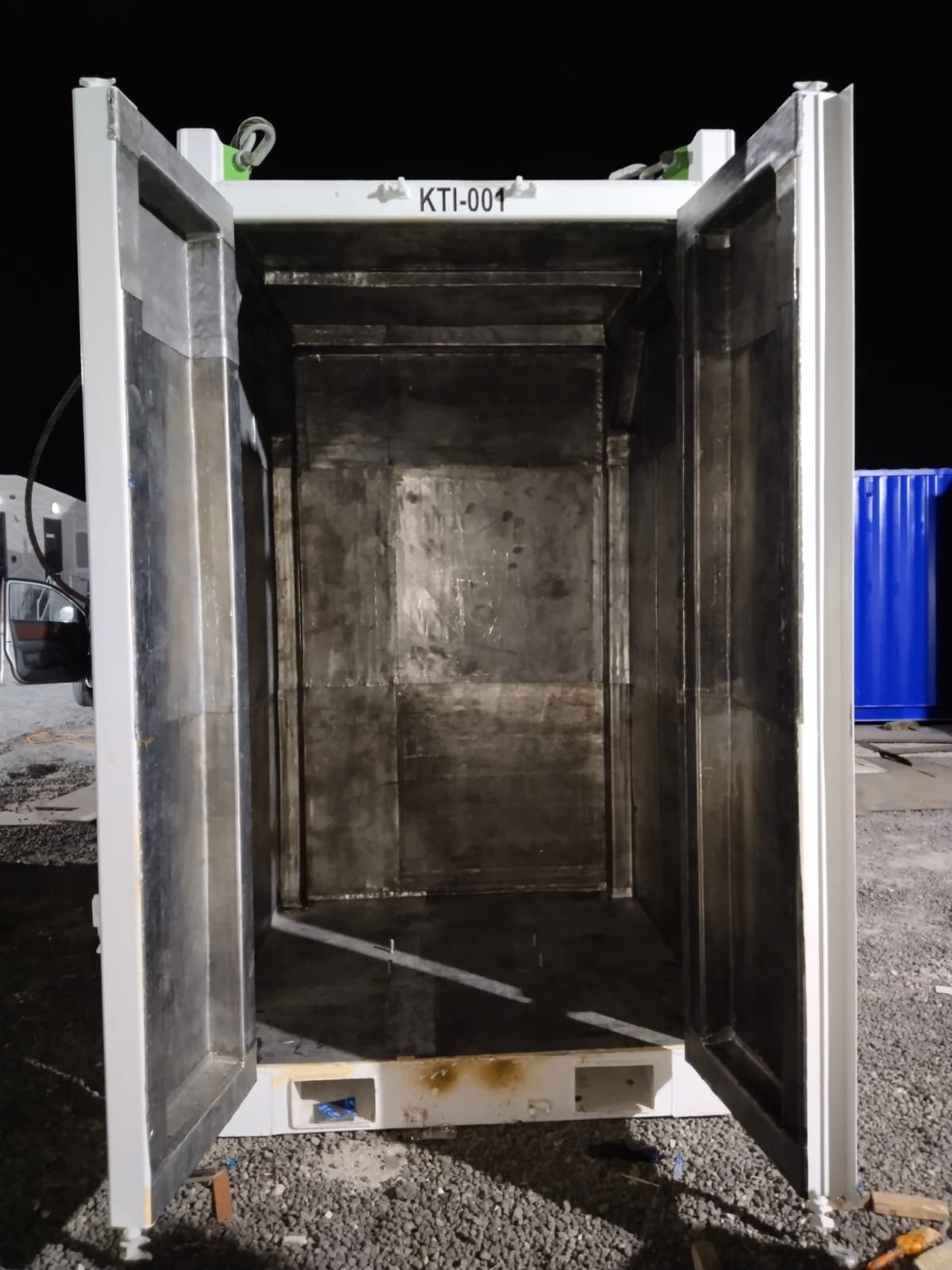
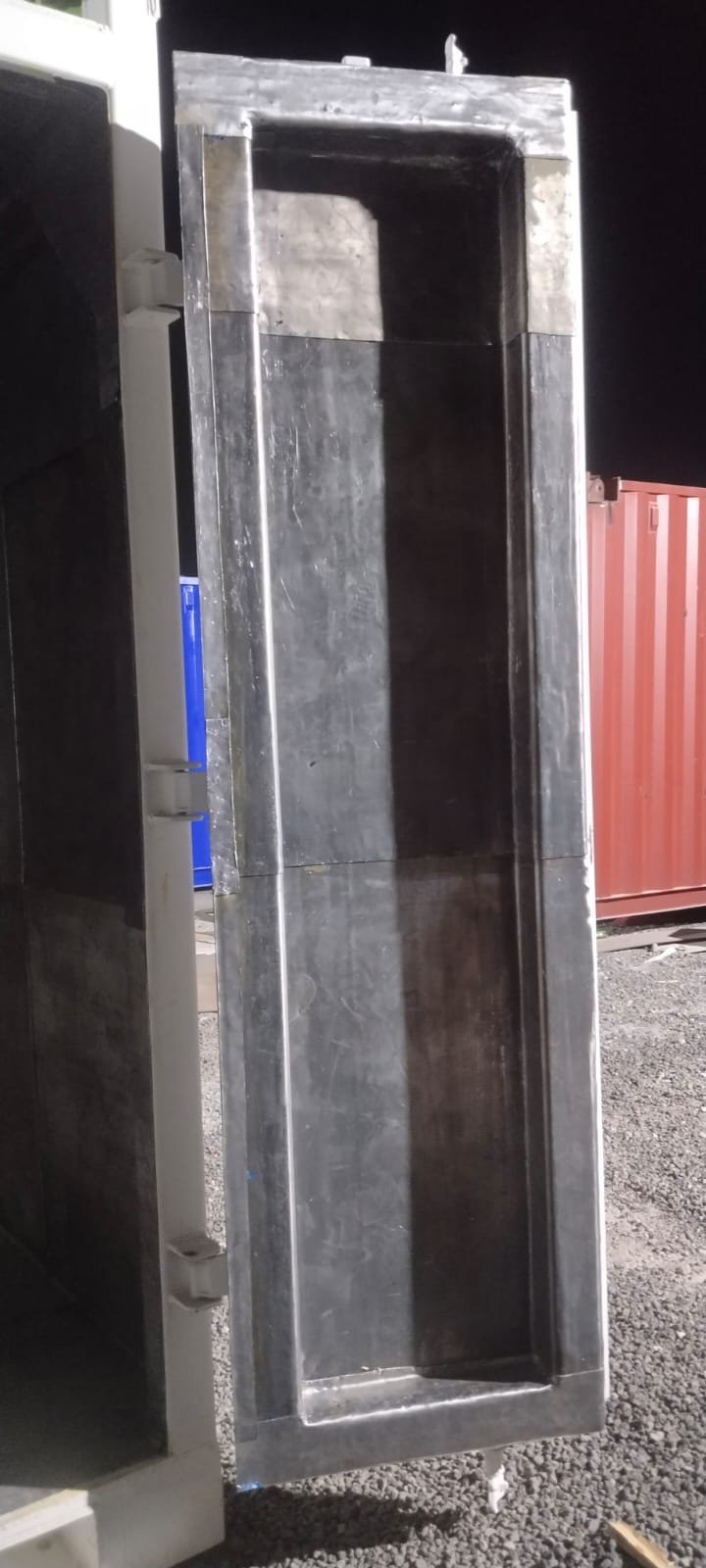
Container Shielding Projects by Emirate
Explore our UAE location pages for project planning and coordination information:
- Container shielding projects in Abu Dhabi
- Container shielding projects in Dubai
- Container shielding projects in Sharjah
- Container shielding projects in Ajman
- Container shielding projects in Ras Al Khaimah
- Container shielding projects in Fujairah
- Container shielding projects in Umm Al Quwain
What Is a Container Radiation Shielding Project?
A container shielding project adapts a container or container-like enclosure into a controlled space for a defined radiation-related activity. Depending on the use case, the scope may include shielding barriers, a designed entrance, protected service penetrations, warning indicators, interlocks or access-control interfaces, ventilation, lighting, electrical services, fire and environmental considerations, and provisions for inspection and maintenance.
For industrial radiography and NDT, the project team must understand the source or X-ray equipment, operating positions, beam directions, exposure frequency, maximum intended operating conditions, and the locations where workers or members of the public may be present. These inputs inform the design basis and the assessment of surrounding areas. A container shell by itself should never be assumed to provide adequate radiation protection.
Applications and Intended Use
Potential applications may include dedicated industrial radiography work areas, inspection facilities supporting oil and gas or energy projects, and other specialist industrial settings where a controlled enclosure is appropriate. The suitability of a containerised solution depends on the actual equipment, work process, site restrictions, transport or relocation requirements, and regulatory review. Some applications may be better served by a purpose-built room or another engineered arrangement.
At the start of a project, clients should describe the materials or components to be inspected, the expected inspection workflow, equipment details, operating schedule, site location, nearby occupied areas, and whether the installation is permanent or intended to be relocated. Clear scope definition reduces redesign and helps all parties work from the same assumptions.
Project Discovery and Technical Brief
The discovery stage establishes the requirements that the engineering team needs before committing to a design. Information may include equipment manufacturer and model, maximum output or source characteristics, intended work positions, workload assumptions, access frequency, container dimensions, site drawings, utility needs, nearby buildings, occupied workstations, vehicle routes, and environmental constraints.
Where details are not yet known, they should be recorded as open items rather than silently assumed. A technical brief should identify the client, site, intended use, design responsibilities, applicable standards and authority requirements to be confirmed, required deliverables, review stages, and any constraints that could affect fabrication or installation.
Radiation Shielding Calculations and Design Basis
Shielding design should be developed by appropriately qualified professionals using the actual source or equipment characteristics, workload, geometry, direction of radiation, use factors where applicable, distance, occupancy, and dose design objectives relevant to the project. The assessment considers not only direct radiation through barriers but also possible streaming through joints, doors, ducts, cable routes, service penetrations, and other discontinuities.
Design assumptions and inputs should be documented so they can be checked and updated if equipment, workload, layout, or neighbouring occupancy changes. Generic thickness tables or a previous project’s design should not be substituted for project-specific calculations. The selected materials and construction details must be compatible with the calculations, structural requirements, fabrication tolerances, and verification plan.
Container Structure and Shielding Continuity
The engineering review should consider the container frame, floor, roof, walls, corner posts, doors, joints, reinforcement, and the way shielding components connect to one another. The base container may require modification or additional engineered support; this must be assessed rather than presumed. Added shielding can affect total mass, centre of gravity, lifting arrangements, transport limits, floor loading, and foundation or support requirements.
Shielding continuity is a key design consideration. Interfaces between panels and around corners, frames, door edges, and penetrations need details that prevent unintended gaps or radiation streaming. Fabrication drawings should define the intended materials, dimensions, overlaps or joints, fastening methods, inspection points, and acceptable tolerances. Changes made on the workshop floor or at site should be reviewed and recorded before being accepted.
Doors, Penetrations, and Radiation Streaming
Entrances and service routes can be challenging areas in a shielding enclosure. Door design must be coordinated with the shielding calculation, structural frame, opening size, usage frequency, safe movement of components, and the required access controls. Where appropriate, the design may need interlocks, status indicators, warning lights, emergency release provisions, or other safety interfaces determined by the risk assessment and applicable requirements.
Ventilation ducts, electrical conduits, control cables, data links, pipes, and other penetrations should be planned early. Uncoordinated drilling or cutting can compromise shielding continuity. Each opening should be assessed, detailed, inspected, and included in the as-built documentation. The installation team should not make unapproved penetrations or rely on improvised patching as a substitute for an engineered detail.
Internal Layout and Operating Workflow
The internal layout should reflect the equipment envelope, workpiece dimensions, handling method, operator position, maintenance access, and normal movement of personnel and materials. Clear separation between controlled work areas and adjacent support functions can improve workflow and reduce accidental access. Layout reviews should also consider visibility, emergency egress, housekeeping, and the ability to inspect critical components.
For projects handling heavy or long components, the client should identify loading methods, trolley or lifting equipment, door clearances, floor requirements, and any openings needed for handling. These operational details influence enclosure dimensions and can affect shielding design. The final layout should be reviewed against both the radiation safety requirements and the practical needs of the work process.
Radiation Protection Systems and Access Control
Safety systems should be selected from the documented hazard assessment and relevant requirements. Depending on the application, these may include radiation warning signs, illuminated status indicators, access restrictions, door interlocks, emergency stop interfaces, communication arrangements, written operating procedures, and controls for preventing entry during exposures. Equipment selection and safety logic must be defined by competent specialists and validated for the intended operation.
Hardware alone is not a complete safety programme. The operator needs clear responsibilities, training, controlled access, maintenance arrangements, incident response procedures, and a process for reporting faults. Any bypass, failure, or change affecting a safety function should be managed under a documented procedure and assessed before the system returns to service.
Ventilation, Electrical, Fire, and Environmental Interfaces
Supporting services must be coordinated with the enclosure design. Depending on the equipment and work environment, the project may require ventilation or heat management, electrical distribution, task lighting, emergency lighting, fire detection or protection interfaces, communication, and safe cable management. These services should be considered alongside shielding so that openings, equipment locations, and maintenance access do not conflict with radiation protection measures.
Environmental conditions, corrosion protection, drainage, dust, humidity, temperature, noise, and the site’s fire and emergency requirements may also affect material selection and long-term reliability. Responsibility for each service should be assigned clearly among the client, designer, fabricator, installer, and specialist subcontractors.
Site Survey, Placement, and Surrounding Occupancy
Before fabrication or delivery, the project team should review where the enclosure will be located and how it will be installed. Relevant information can include access roads, crane or lifting access, ground or foundation conditions, drainage, nearby structures, adjacent work areas, public access, site security, utilities, and future maintenance routes. The surrounding occupancy and boundaries are important inputs to the radiation assessment and should be documented accurately.
For a relocatable unit, the plan should address lifting points, transport dimensions, tie-down or restraint requirements, inspection after transport, reconnection of services, and reassessment of the new site’s conditions. Moving an enclosure can change distances and occupancy relationships; therefore, the original assessment should not automatically be assumed valid at a different location.
Fabrication Quality Assurance and Traceability
Quality planning translates the approved design into a controlled build. Depending on the project, records may include approved drawings, material certificates, component identification, weld or fastening inspections, dimensional checks, coating records, nonconformance reports, photographs of concealed work, and verification that penetrations and joints match the approved details. The exact inspection and testing plan should be agreed before fabrication begins.
Material substitutions, altered dimensions, changes to the door arrangement, and revisions to service routes can affect the design basis. They should be reviewed by the responsible technical parties, documented, and approved before implementation. A traceable record of revisions helps the client and future maintenance team understand what was actually constructed.
Installation, Commissioning, and Radiation Survey
Installation planning should cover delivery, placement, levelling or support, anchoring where required, service connections, equipment installation, safety-system checks, and inspection of the completed enclosure. Before operation, the project needs a commissioning and verification plan matched to its design and regulatory obligations. Relevant checks may include inspection of barriers and penetrations, functional testing of warning and access-control systems, confirmation of documentation, and a radiation survey under controlled conditions.
Radiation survey measurements should be performed by competent personnel using suitable, calibrated instruments and a method appropriate to the equipment and operating conditions. Survey locations and results should be recorded, evaluated against the applicable acceptance criteria, and addressed before routine operation if issues are identified. Neither the existence of shielding calculations nor successful fabrication alone proves that the installed system is ready for use.
UAE Regulatory Coordination and Document Control
Regulatory requirements depend on the activity, equipment or source, operator, site, and competent authority jurisdiction. The project team should confirm the approvals, licences, notifications, inspections, and supporting documents that apply before work or operation begins. MedCare Hub can help coordinate project information and documentation, but any required approval remains subject to the relevant authority and the client’s compliance obligations.
A controlled document package may include the project brief, design basis, drawings and revisions, calculation reports, material and fabrication records, inspection results, equipment information, safety-system documentation, operating procedures, training records, commissioning results, survey reports, and maintenance instructions. The final list should be agreed for the project rather than treated as a universal checklist.
Project Deliverables and Handover
At handover, the client should receive the records needed to operate, maintain, inspect, and manage the enclosure safely. Depending on the scope, deliverables may include approved and as-built drawings, design assumptions, material traceability, inspection and test records, safety-system manuals, commissioning documentation, radiation survey results, operating instructions, maintenance schedules, and a list of outstanding actions or limitations.
Handover should also explain who owns each ongoing responsibility, how faults are reported, which checks are required, how modifications are approved, and where controlled documents are stored. Any unresolved item should be clearly identified with an owner and an agreed action rather than being obscured in a general completion statement.
Maintenance and Management of Change
Shielding enclosures and their associated systems require appropriate inspection and maintenance over their service life. The maintenance plan should consider door alignment and seals, shielding joints, corrosion or damage, warning indicators, interlocks, emergency functions, ventilation, electrical services, and any areas subject to wear or repeated handling. The frequency and extent of checks should reflect the design, operating conditions, manufacturer guidance, risk assessment, and applicable requirements.
Changes to equipment output, source characteristics, workload, work positions, container location, nearby occupancy, door or penetration details, or safety-system configuration may invalidate earlier assumptions. A formal management-of-change process should require technical review and any necessary recalculation, survey, documentation update, and regulatory consultation before the changed arrangement is used.
How to Request a Container Shielding Proposal
To start a discussion, provide the project location, intended application, equipment or source details available, proposed enclosure dimensions, expected workload, operating schedule, site drawings or photographs, nearby occupancy information, utility requirements, target programme, and any known authority or client specifications. Identify whether the unit will be fixed or relocated and whether design, fabrication, installation, verification, or documentation support is required.
MedCare Hub can review the available brief, identify missing information, and help coordinate the next steps with the relevant technical stakeholders. A proposal should state the scope, assumptions, exclusions, client responsibilities, deliverables, review points, and verification requirements so expectations are clear before work proceeds.
Frequently Asked Questions
Can any shipping container be converted into a radiation shielding enclosure?
No. A standard container should not be assumed to provide adequate shielding or structural support. Suitability depends on the source or equipment, calculated shielding requirements, construction details, loading, intended use, and project-specific review.
What information is needed before shielding design starts?
Useful starting information includes equipment or source characteristics, workload, operating geometry, workpiece dimensions, proposed layout, container details, site plans, surrounding occupancy, and applicable project or authority requirements. Missing information should be identified and resolved during discovery.
Are doors and service penetrations included in the assessment?
Yes. Doors, joints, ducts, cables, pipes, and other penetrations can affect shielding continuity and radiation streaming. They should be incorporated into the design, construction details, inspection plan, and final verification.
Does completing the container mean it is ready for operation?
Not automatically. The completed installation needs the required inspections, functional checks, documentation, and radiation verification under the applicable project and regulatory process. Operation should begin only after the responsible parties confirm that all required conditions have been met.
Can the enclosure be moved to another site later?
Potentially, if the design and handling arrangements support relocation. The new site, surrounding occupancy, installation conditions, services, and applicable requirements must be reassessed; prior survey results should not be assumed to apply unchanged at the new location.
Which UAE approvals are required?
Requirements depend on the specific activity, equipment or source, operator, and jurisdiction. Confirm the applicable approvals and documentation with the competent authority and qualified radiation protection professionals before fabrication, installation, or operation as required.
Discuss Your Container Shielding Project
For a project-specific discussion, contact MedCare Hub with your site location, intended use, equipment details, and expected deliverables. We can help organise the initial requirements and coordinate a clear scope for technical review, project planning, quality documentation, installation, and verification.